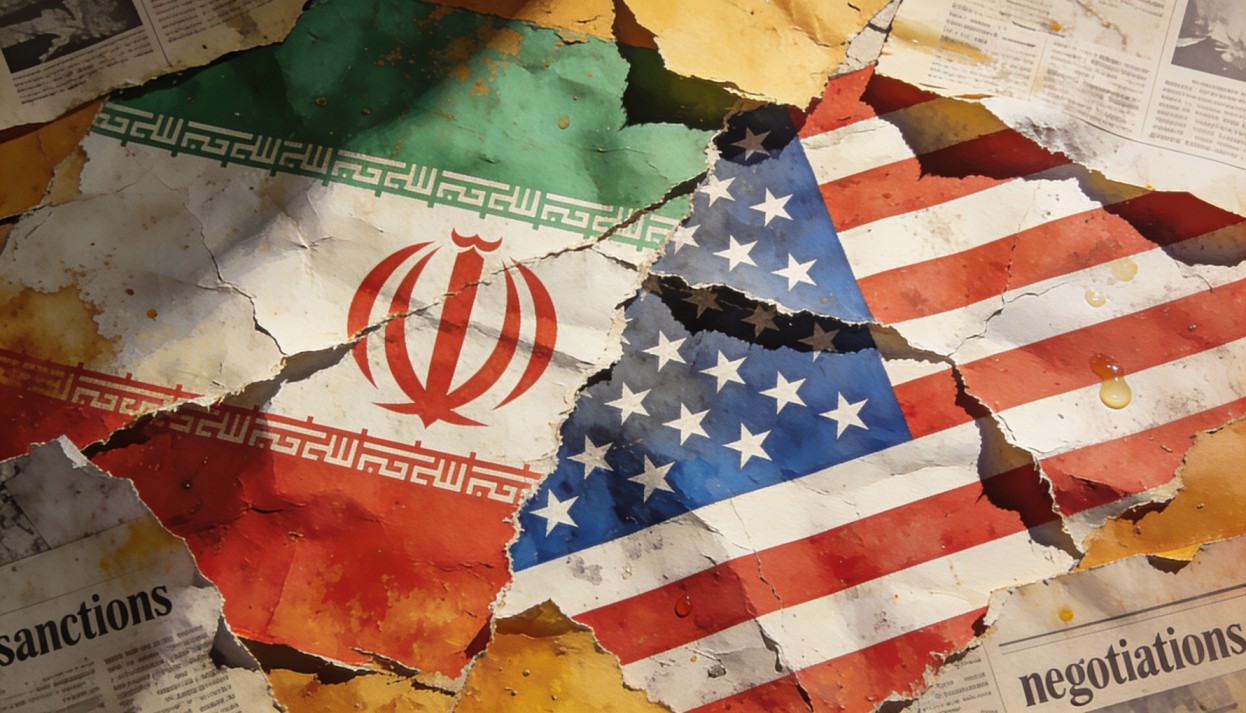

The announcement of the reported 14-point U.S.-Iran Memorandum of Understanding (MoU) has generated understandable optimism across financial markets, energy markets, and diplomatic circles.
The document outlines a pathway toward de-escalation after a period of heightened regional tensions, reopening critical maritime routes and launching negotiations toward a broader agreement between Washington and Tehran.
However, despite the positive headlines, this is not a peace settlement.
If the published text reflects the agreement that will ultimately be signed, it should be viewed primarily as a ceasefire framework and a mechanism to buy time for negotiations. The most difficult issues remain unresolved and have been deliberately deferred into a 60-day negotiating window. The coming two months may prove more consequential than the signing ceremony itself.
The Reported 14 Points
The published draft can be summarized as follows:
- Immediate and permanent cessation of military operations
- End of hostilities on all fronts, including Lebanon.
- Mutual commitment not to attack or threaten each other.
- Mutual respect for sovereignty
- No interference in each other’s internal affairs.
- 60-day negotiation period
- Launch of negotiations toward a comprehensive agreement.
- Possible extension by mutual consent.
- End of U.S. naval blockade
- Removal begins immediately.
- Full removal within 30 days.
- Withdrawal of U.S. military assets from proximity to Iran after a final agreement.
- Reopening of the Strait of Hormuz
- Iran guarantees freedom of commercial navigation.
- Return to pre-conflict shipping volumes within 30 days.
- Iran reconstruction program
- Minimum commitment of USD 300 billion in reconstruction and development support.
- Funding mechanisms to be negotiated separately.
- Phased sanctions relief
- Progressive removal of U.S., UN, and related sanctions under a final agreement.
- Nuclear Framework
- Iran reiterates that it will not pursue nuclear weapons.
- Future enrichment activities and stockpile arrangements remain subject to negotiation.
- Status Quo during negotiations
- Iran freezes further escalation of its nuclear program.
- The United States refrains from introducing new sanctions or military deployments.
- Oil sanctions waivers
- Immediate waivers supporting Iranian oil exports and associated financial, insurance, and shipping activities.
- Release of frozen Iranian assets
- Phased access to restricted Iranian funds linked to implementation milestones.
- Compliance monitoring mechanism
- Joint structure to oversee implementation and compliance.
- Commencement of final negotiations
- Triggered after economic and maritime measures begin implementation.
- United Nations endorsement
- Final agreement to be formalized through a binding UN Security Council resolution.
Why This Document Is Remarkable
If the published text survives largely intact, it represents one of the most consequential diplomatic documents in the Middle East in recent years.
Five Observations from the Published Draft
No Immediate Dismantlement of Iran’s Nuclear Infrastructure
The memorandum does not appear to require immediate dismantlement of Iran’s nuclear facilities. Instead, the most contentious issues – including enrichment levels, stockpile disposition, inspection regimes, and long-term nuclear restrictions – are deferred to future negotiations.
This creates diplomatic space, but also leaves the central dispute unresolved.
Economic Relief Appears Front-Loaded
Several provisions provide immediate economic benefits to Iran, including oil-export waivers, the gradual release of frozen assets, and the prospect of sanctions relief. By contrast, the most significant Iranian concessions appear scheduled for future negotiations.
Whether this sequencing proves sustainable will likely become one of the central questions of the coming 60 days.
Hormuz Emerges as a Strategic Priority
The speed with which the memorandum addresses maritime traffic suggests that reopening the Strait of Hormuz became an urgent objective. This is hardly surprising. Approximately one-fifth of global oil trade passes through the Strait. Even limited disruptions affect energy markets, shipping costs, inflation expectations, and broader economic stability. Before the March 2026 conflict, the following energy volumes transited the Strait of Hormuz:
| Commodity | Typical Throughput (Pre-March 2026) | Share of Global Trade |
|---|---|---|
| Crude Oil & Condensate | ~14.7–15.0 million barrels/day | Core component of Hormuz energy flows |
| Refined Petroleum Products (diesel, jet fuel, fuel oil, gasoline) | ~4.8–5.5 million barrels/day | Significant share of global refined product trade |
| Total Oil (Crude + Refined Products) | ~20.0 million barrels/day (20.3 million b/d in 2024; ~20.9 million b/d in H1 2025) | ~25% of global seaborne oil trade; ~20% of global oil consumption |
| Liquefied Natural Gas (LNG) | ~112 bcm/year (≈ 80–82 million tonnes LNG equivalent) | ~20% of global LNG trade |
The memorandum’s focus on restoring commercial traffic reflects the global importance of maritime security in the Gulf. The following economies are among the most exposed to disruptions in energy flows through Hormuz:
| Country | Dependence on Hormuz Imports | Why It Matters |
|---|---|---|
| China | Very High | Largest buyer of Gulf oil; major buyer of Qatari LNG |
| India | Very High | Imports ~60%+ of crude oil from Gulf suppliers |
| Japan | Extremely High | Historically 80–90% of oil imports originate from Gulf producers |
| South Korea | Extremely High | Heavy dependence on Gulf crude and LNG |
| Pakistan | High | Significant dependence on Gulf energy imports |
| Bangladesh | Moderate to High | Increasing LNG imports from Qatar |
| Thailand | Moderate | Gulf crude remains important |
| Singapore | Moderate | Major refining and trading hub dependent on Gulf supply |
What makes the Strait of Hormuz unique is that disruption affects every major stakeholder differently, yet almost everyone suffers.
First, the Gulf producers, including Saudi Arabia, the UAE, Kuwait, Qatar, Iraq, and Iran itself, depend on uninterrupted maritime access to export the energy resources that underpin their economies. A prolonged disruption restricts their ability to reach global markets and generates immediate economic losses.
Second, the economies of East and South Asia are heavily dependent on energy imports that transit the Strait. China, India, Japan, and South Korea collectively account for a significant share of global demand for Gulf oil and LNG. For these countries, uninterrupted access through Hormuz is not merely an energy issue – it is a strategic necessity that directly affects economic growth, industrial production, and energy security.
Third, while the United States is not materially dependent on energy imports through Hormuz, it remains highly exposed to the economic consequences of disruption. Reduced global supply drives higher oil prices, which in turn creates inflationary pressure, affects consumer spending, and increases political and economic risks domestically.
Finally, Europe faces a similar challenge. While its direct dependence on Gulf energy is more moderate than that of Asia, European economies remain vulnerable to higher energy prices, and broader inflationary effects resulting from instability in global energy markets.
In other words, a disruption in Hormuz is not simply a regional problem. It is one of the rare geopolitical events capable of simultaneously affecting energy producers, energy consumers, financial markets, supply chains, and inflation expectations across the world economy. This helps explain why restoring commercial traffic through Hormuz appears to have become one of the most urgent priorities embedded in the reported memorandum.
Lebanon’s Inclusion Is Not Accidental
The repeated references to Lebanon suggest that the regional dimension of the conflict was deeply embedded within negotiations. This raises the possibility that understandings concerning Hezbollah and related security arrangements formed part of the broader bargaining package, even if they do not appear explicitly in the published text.
What Is Missing May Be Equally Important
Several subjects traditionally associated with negotiations involving Iran appear notably absent from the reported draft. These include:
- Iran’s ballistic missile program.
- Regional proxy networks.
- Armed non-state actors aligned with Tehran.
- Long-term regional security architecture.
Whether these issues have been postponed, addressed through parallel channels, or intentionally excluded remains unclear.
Why the Next 60 Days Matter More Than the Signing
The greatest risk to the memorandum is not the signing itself. The greatest risk is implementation.
Risks That Could Derail the Process
History suggests that ceasefires and framework agreements are often most vulnerable immediately after signature, when expectations rise but trust remains limited. Several scenarios could derail the process.
A) Military Escalation
Any unilateral military action by regional actors could rapidly undermine confidence.
A strike against Iranian nuclear infrastructure, retaliatory action by Iranian-aligned groups, or a maritime incident in the Gulf could quickly reverse momentum.
B) Maritime Disruptions
Even isolated shipping incidents in the Strait of Hormuz would immediately raise questions about compliance and intent. Commercial shipping markets react quickly to perceived risk, regardless of formal commitments.
C) Domestic Political Opposition
Diplomatic agreements are not negotiated only between states. They are also negotiated within states. Hardline factions in both Washington and Tehran may view concessions with skepticism. The prospect of normalization may generate political resistance from actors who benefit from continued confrontation.
D) Regional Stakeholder Concerns
Regional allies and partners will be closely monitoring implementation. Questions surrounding sanctions relief, nuclear restrictions, and future security guarantees could create pressure on negotiators throughout the process.
The U.S.-Iran memorandum may represent the beginning of a historic diplomatic breakthrough. Or it may prove to be a temporary pause before renewed confrontation.
E) Information Operations and Miscalculation
The implementation period is likely to generate a flood of conflicting claims, unofficial reports, leaks, manipulated narratives, and disinformation campaigns. In an environment where trust remains limited, a false report or misinterpreted event could trigger reactions that become self-reinforcing and destabilizing.
The answers to these questions will not be found in the signing ceremony. They will emerge from the signals generated during the 60 days that follow. The challenge for decision-makers is distinguishing the signals that matter from the noise that inevitably surrounds them.
How Sensika Can Help Navigate the Intelligence Challenge Ahead
The coming 60 days will not simply be a diplomatic process. They will be an intelligence challenge.
For governments, corporations, investors, energy companies, logistics operators, and critical infrastructure providers, understanding what is happening in the Middle East will require more than following headlines. The key questions will not be limited to what leaders say publicly, but to the signals emerging beneath the surface.
- Access Ground-Level Signals in Real Time
The Middle East is one of the world’s fastest-moving and most complex information environments. Critical developments often emerge first through local media, government statements, social platforms, industry sources, and regional commentators long before they reach international headlines.
At Sensika, we continuously collect, verify, enrich, and analyze information from news media, social media, broadcast content, government communications, and public discourse across the Middle East and beyond. This provides organizations with direct visibility into developments as they unfold, rather than after they have already shaped markets, policy, or public opinion.
- Navigate Miscalculation, Narrative Warfare, and Information Operations
Periods of geopolitical uncertainty create fertile ground for misinformation, disinformation, manipulated narratives, and information operations.
During the implementation of the U.S.-Iran memorandum, markets and decision-makers are likely to face a constant stream of conflicting claims, unofficial reports, leaked documents, anonymous sources, and competing interpretations of events.
Understanding what is true, what is false, and what is strategically amplified requires more than access to information. It requires regional expertise, contextual understanding, and the ability to distinguish meaningful signals from background noise.
This is where intelligence becomes more valuable than information.
- Transform Information into Actionable Intelligence
Decision-makers will need to answer questions such as:
- Which narratives are gaining traction inside Iran, Israel, and the Gulf states?
- How are regional governments, political actors, and influential stakeholders responding?
- What signals are emerging from political, economic, military, energy, and media environments?
- Which developments represent temporary noise, and which indicate meaningful strategic shifts?
- What risks are building before they become visible in mainstream reporting?
- How might these developments affect markets, supply chains, investments, operations, and public policy?
Answering these questions requires the ability to continuously monitor, interpret, and assess developments across multiple domains.
At Sensika, our mission is not simply to collect information. It is to transform information into actionable intelligence that helps public-sector institutions, corporations, and strategic decision-makers understand what is happening, why it matters, and what may happen next.
Because in periods of geopolitical uncertainty, the greatest risk is often not what organizations know, but what they fail to see in time.
Some of our reports:
To learn more about how geopolitical, regulatory, and narrative developments across the Middle East can be transformed into actionable intelligence, explore some of our recent analyses below.
The Battle for Iran’s Narrative
How the World Sees War: Media Narratives from the Iran-Israel Conflict
From Jenin to Brussels: Media Reactions to a Diplomatic Incident