
Facebook groups change their names, anonymous “media outlets” follow shared posting schedules, and AI-generated satire attracts millions of views. What’s behind the election campaign activity we see online?
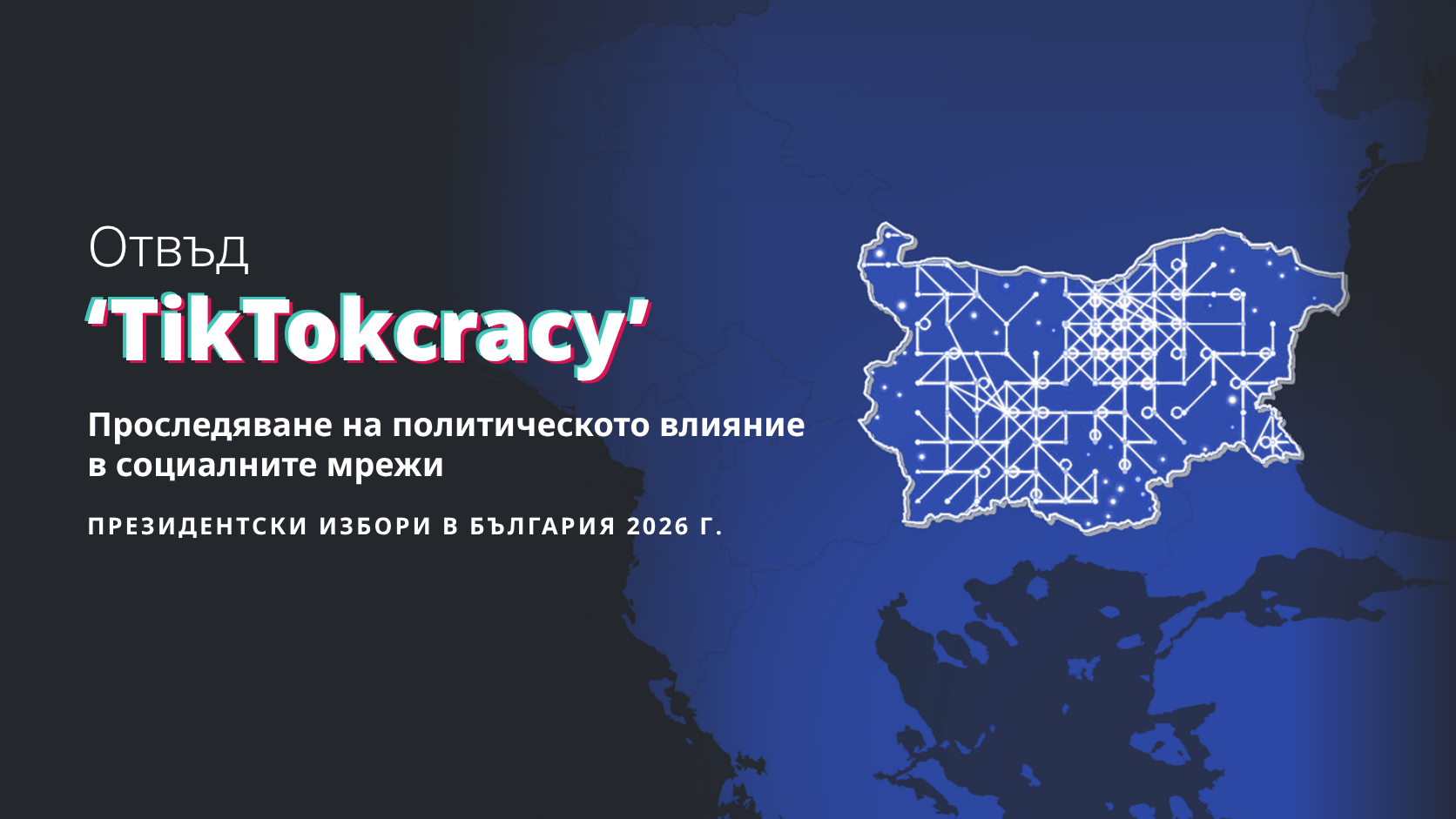
The new report by Sensika Technologies, Beyond TikTokcracy, prepared with the support of the Balkan Free Media Initiative (BFMI), examines how political content spread around Bulgaria’s 2026 presidential election. The analysis covers nearly 70,000 posts and videos published by more than 6,000 sources across six platforms between August 20 and October 21, 2026.
One of the report’s main findings is that coordinated and artificially amplified activity continues, although on a smaller scale than during the parliamentary elections in the spring. Some established networks have become less active, others are redirecting their audiences, and new accounts have taken over the role of distributing content.
Ready-Made Audience, New Candidate
The report examines how established audiences on Facebook, for example, are redirected by renaming existing groups. A group originally devoted to travel or opposition to the euro can become a community supporting a political candidate.
Two groups in the largest network mapped in the analysis were renamed on the same day in support of Iliana Iotova. Group name histories and shared administrators reveal connections that are not apparent from individual posts. No official ties between these networks and Iotova’s campaign have been established.
Different Accounts, Shared Posting Schedules
On TikTok, several accounts present themselves as independent news pages but follow shared posting schedules and repost one another’s content. Similar patterns are observed among accounts both supporting and opposing the government.
On Telegram, the synchronization is even more striking: the same text appears in five or six groups within the same second. How is this flow of content organized, and how many people could it potentially reach? The report examines both questions.
One Million Views for an AI-Generated Kyuchek Video
AI-generated political satire has become a prominent feature of the campaign. In the videos examined, however, the labels indicating that the content was AI-generated are barely noticeable.
The most-viewed election-related video in the monitored TikTok sample features an AI-generated likeness of Rumen Radev dancing kyuchek. It received approximately 1 million views.
EUR 134,400 for a TV Channel With a Limited Visible Audience
Ten presidential tickets have signed contracts with Fair Bulgaria TV (ТВ „Справедлива България“) totaling EUR 134,400 in state-funded media packages. Videos featuring the candidates on the channel’s YouTube account rarely exceed 100 views.
The report also examines connections between some of these presidential candidacies and the wider circle associated with the television channel. These connections raise questions about the public impact of the funding, without in themselves establishing any violation.
The Report Also Explores:
- Hashtags combining Cyrillic and Latin characters and how they can make political content more difficult to monitor.
- Repeated comments under posts by 22 national media outlets that seek to foster distrust of machine voting.
- Overlapping content between Telegram groups associated with the political party Vazrazhdane and channels linked to Russian networks.
- A website imitating the newspaper Standart, promoted through Facebook groups.
- Older political networks becoming less active and new accounts taking over their roles.
- And more.